Fencing Hallucination
Human-AI interactive installation merging movement with pose-conditioned diffusion models
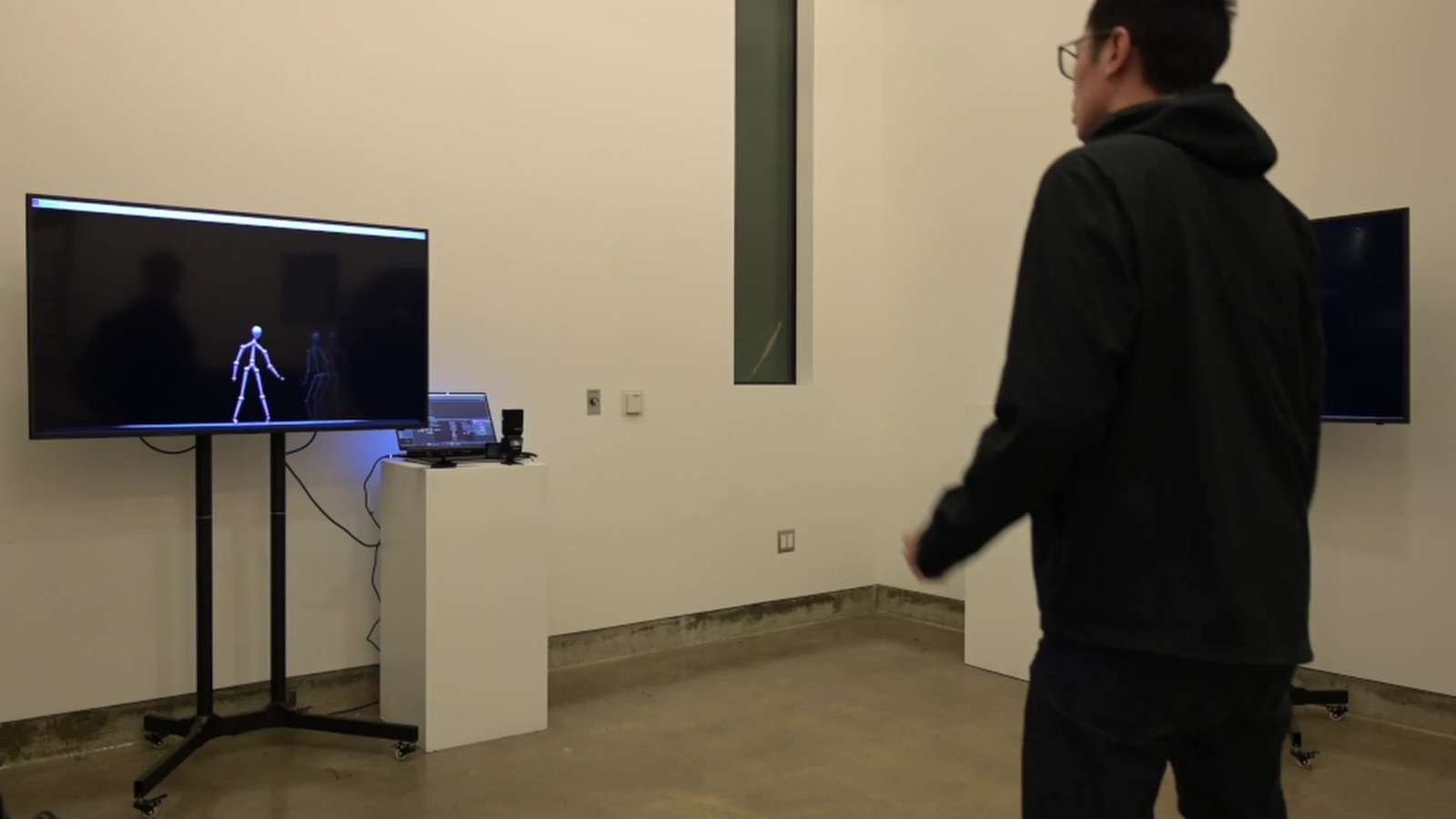
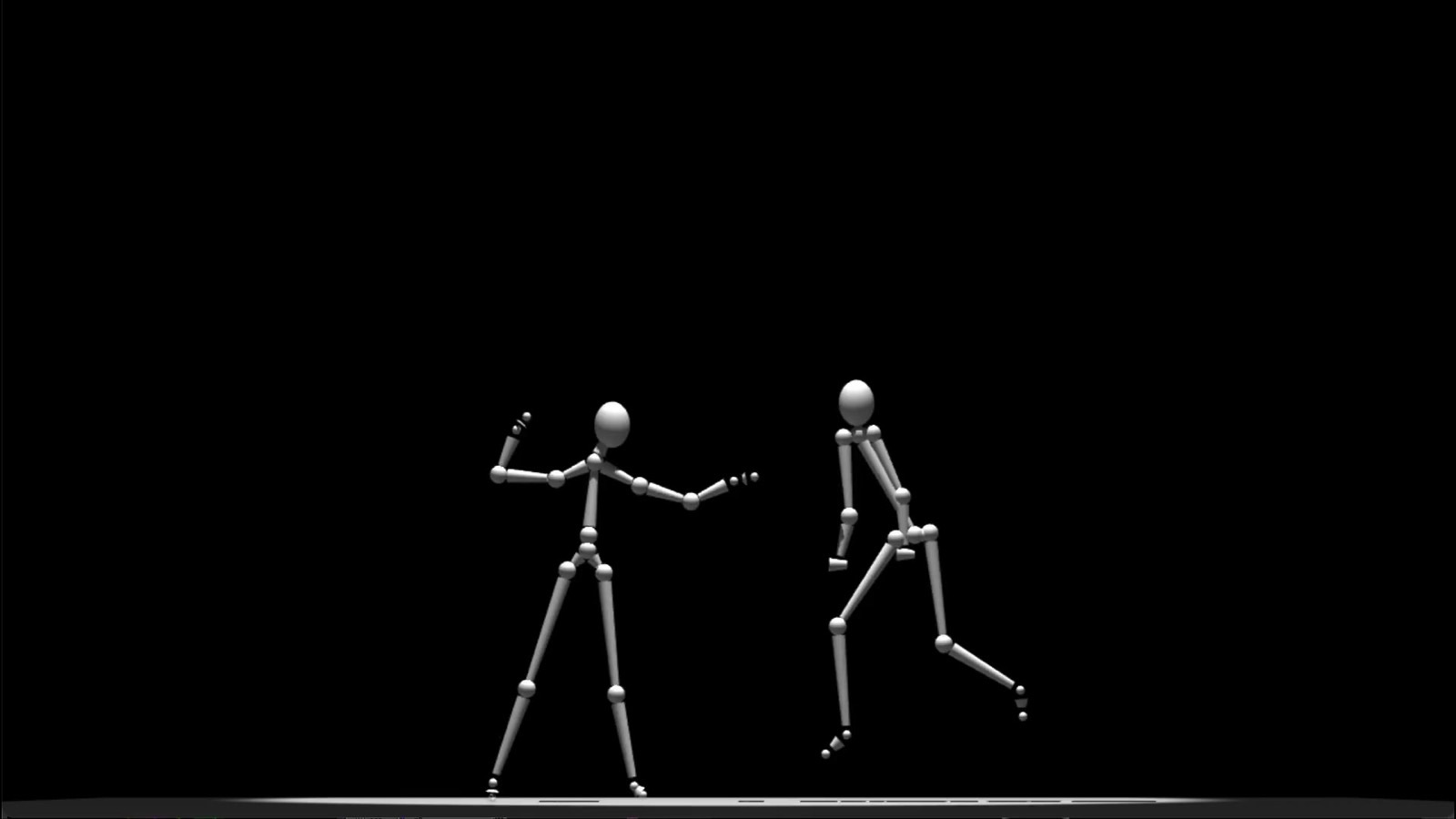
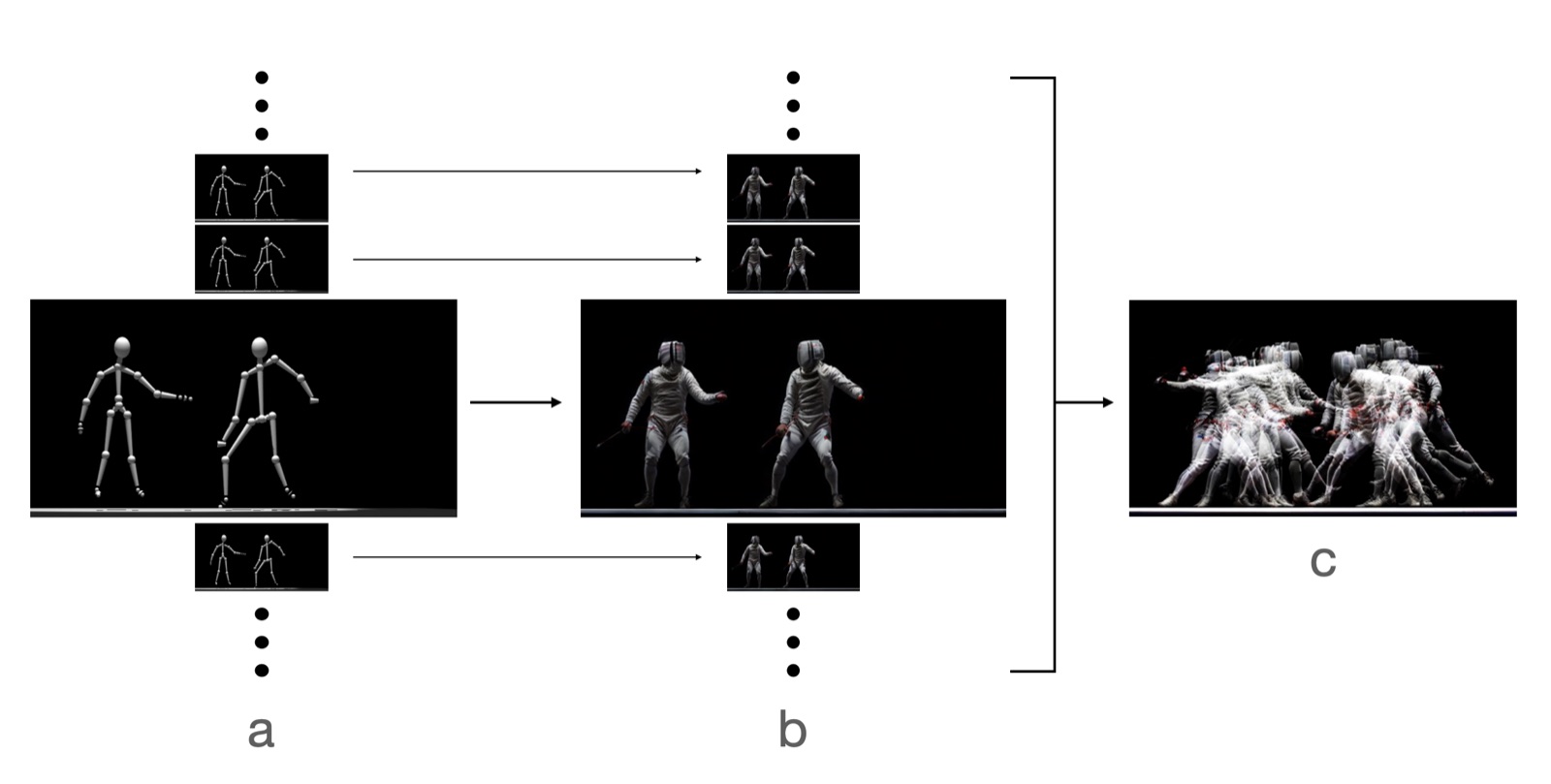
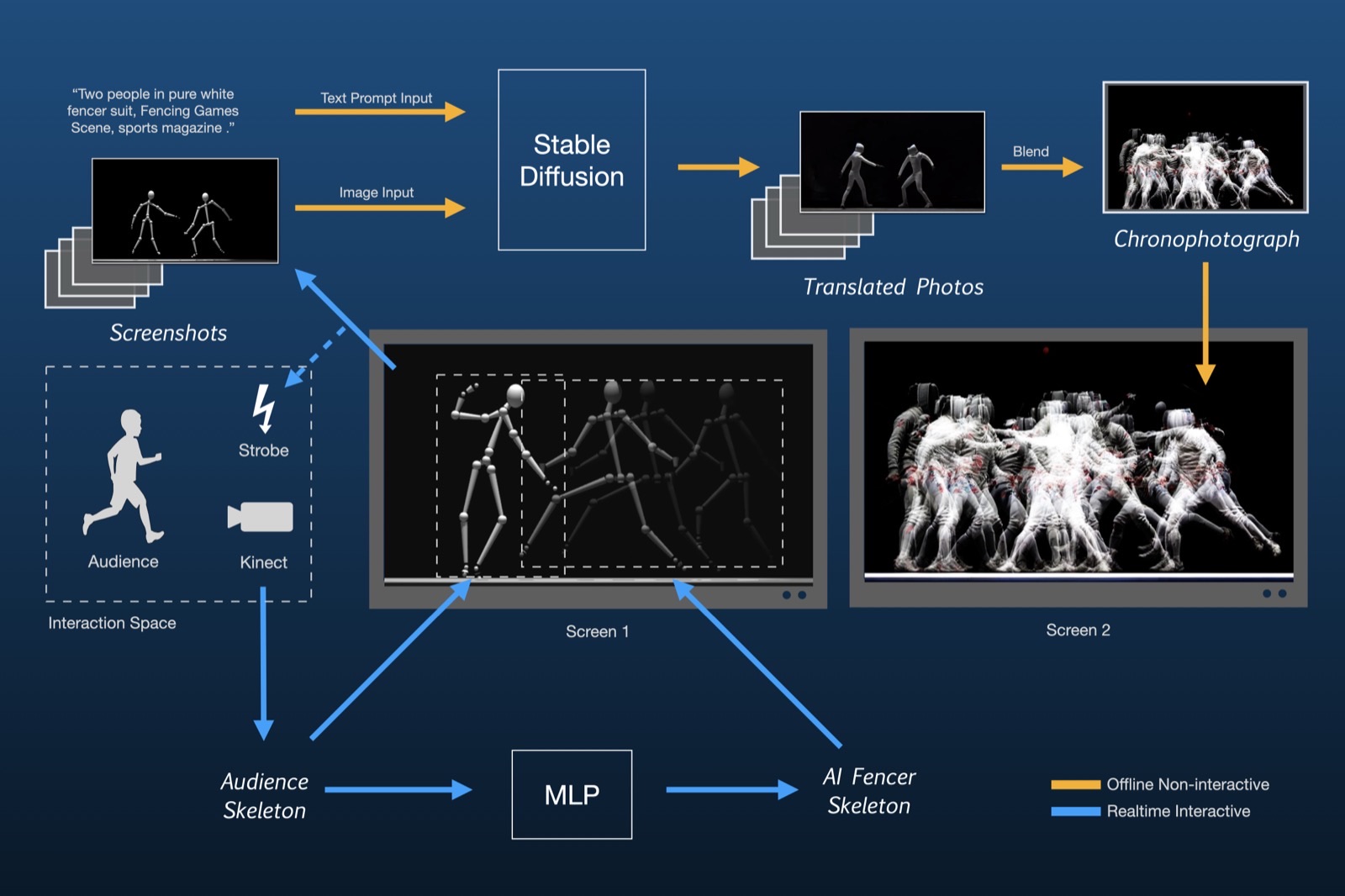
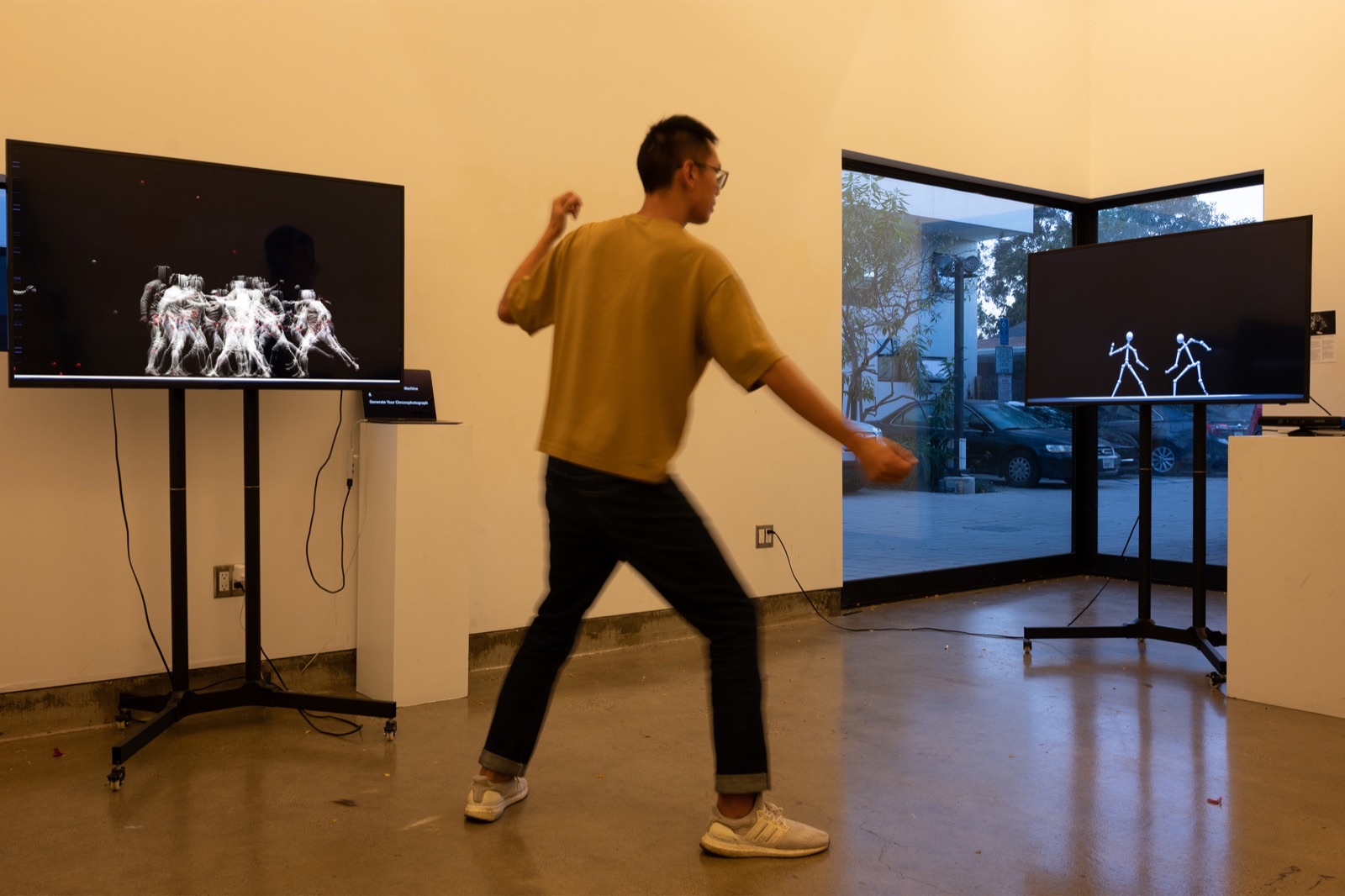
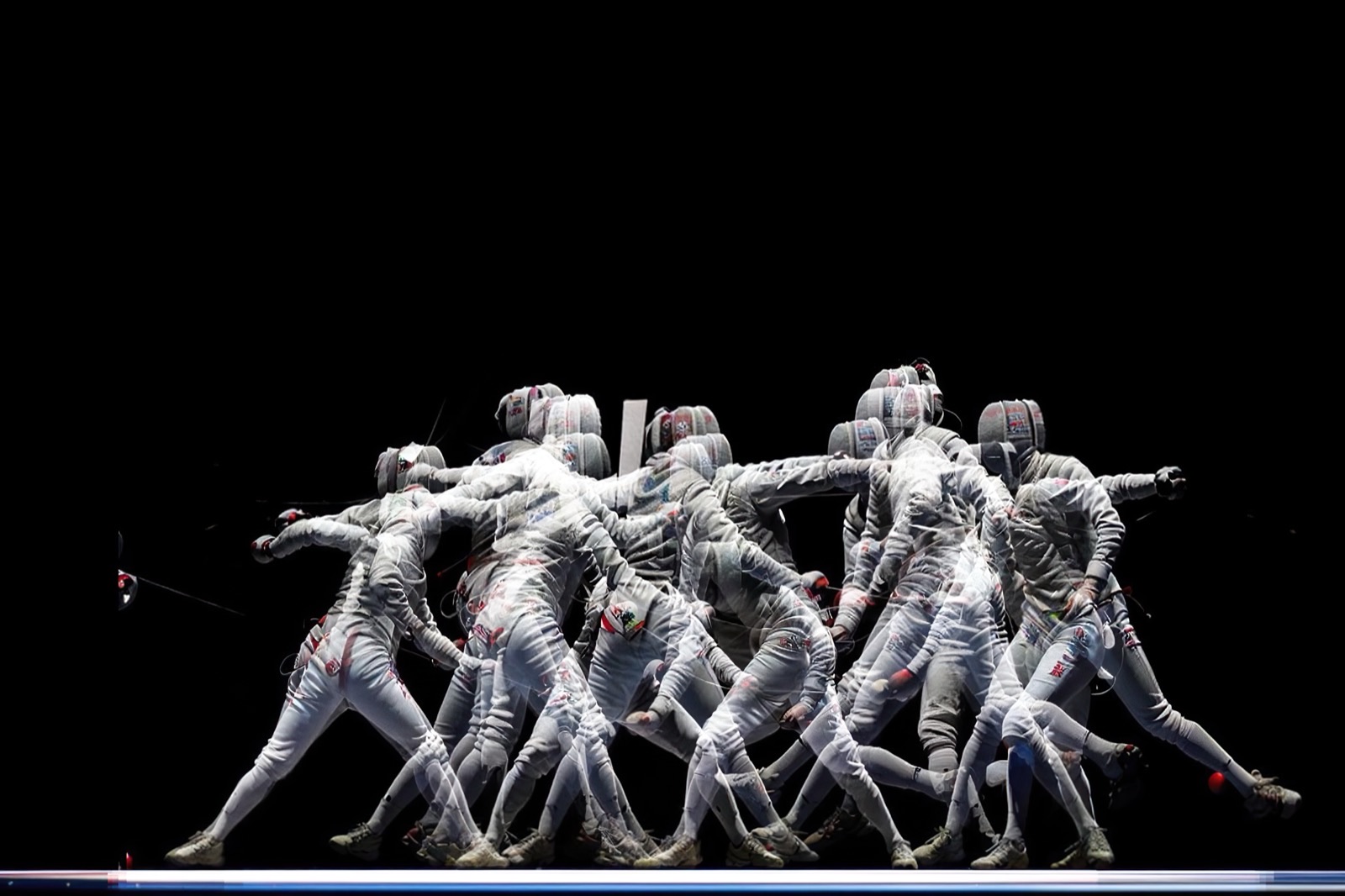
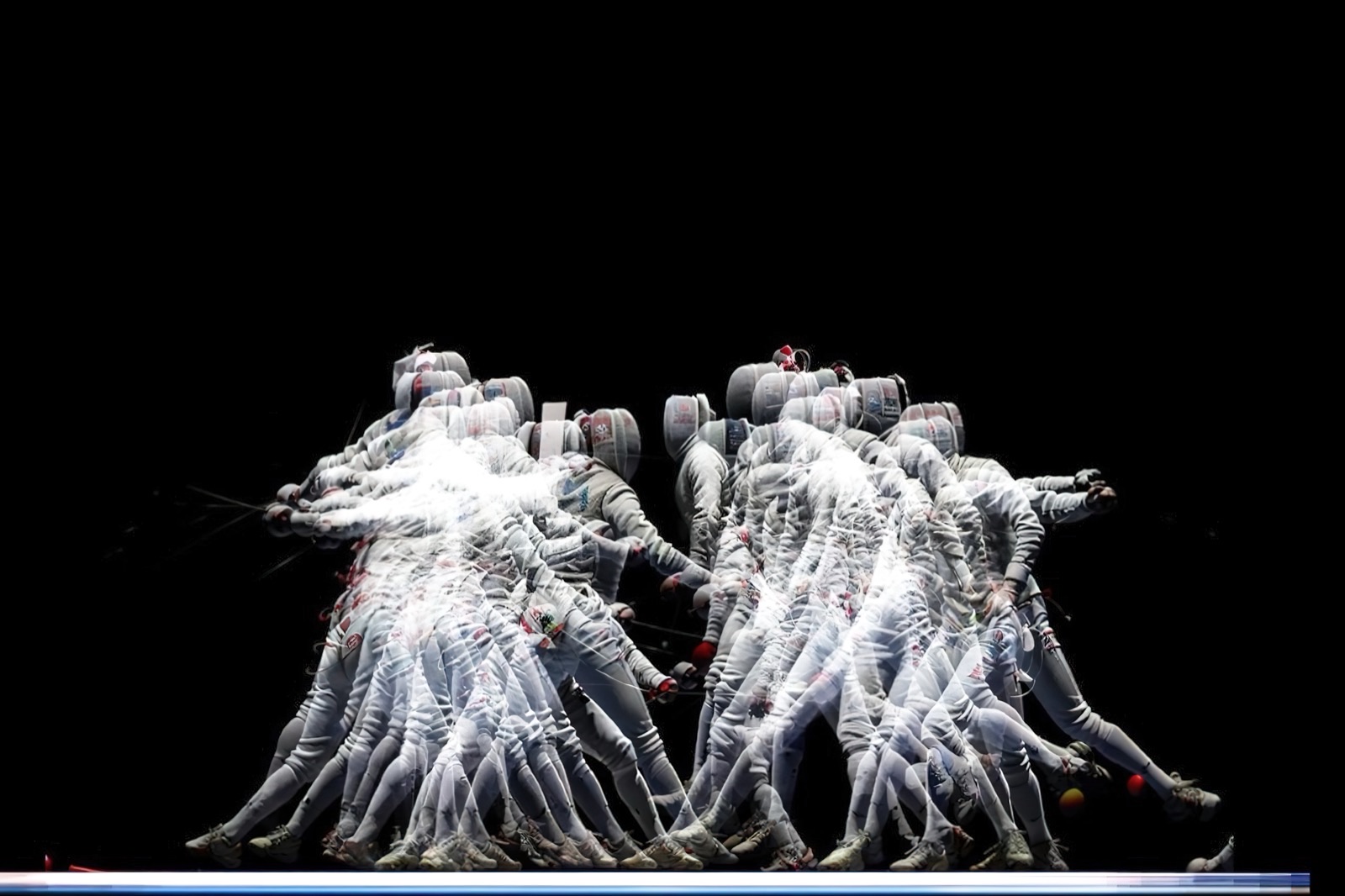
Fencing Hallucination offers a human-AI interactive experience that revisits Chronophotography — the first photographic motion visualization technique, invented in the 1880s — in the context of AI image generators challenging the being of a photograph. The system implements real-time Motion Synthesis and Pose-to-Image Translation with neural networks, hallucinating a virtual AI avatar that responds to the audience’s body movement with fencing postures, and poetically visualizing the human-AI interaction as an AI-simulated Chronophotograph. By letting people experience historic Chronophotography resurrected through a subversive AI imaging tool, Fencing Hallucination calls for reflection on the evolving meanings of images.
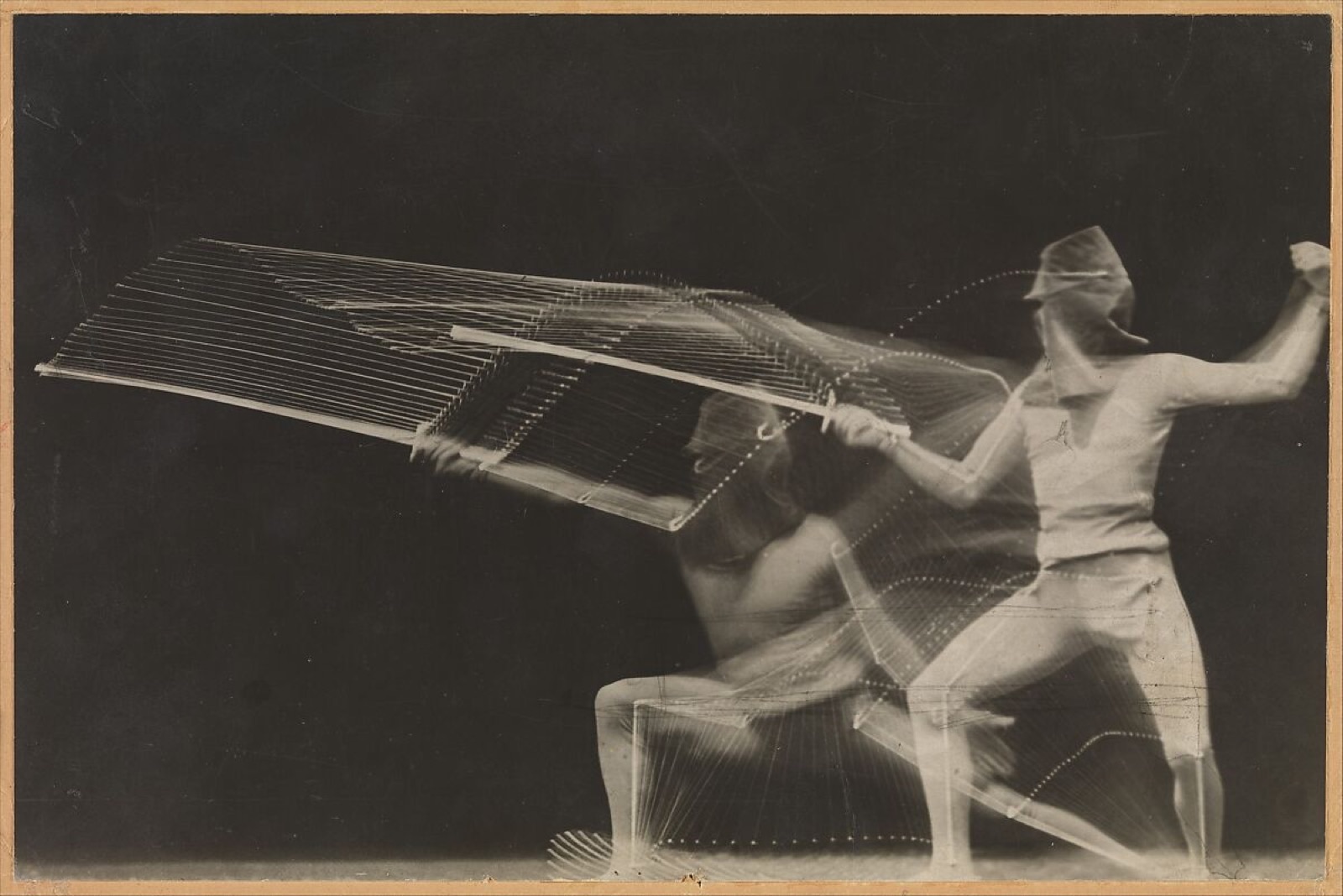
Building the pose dataset
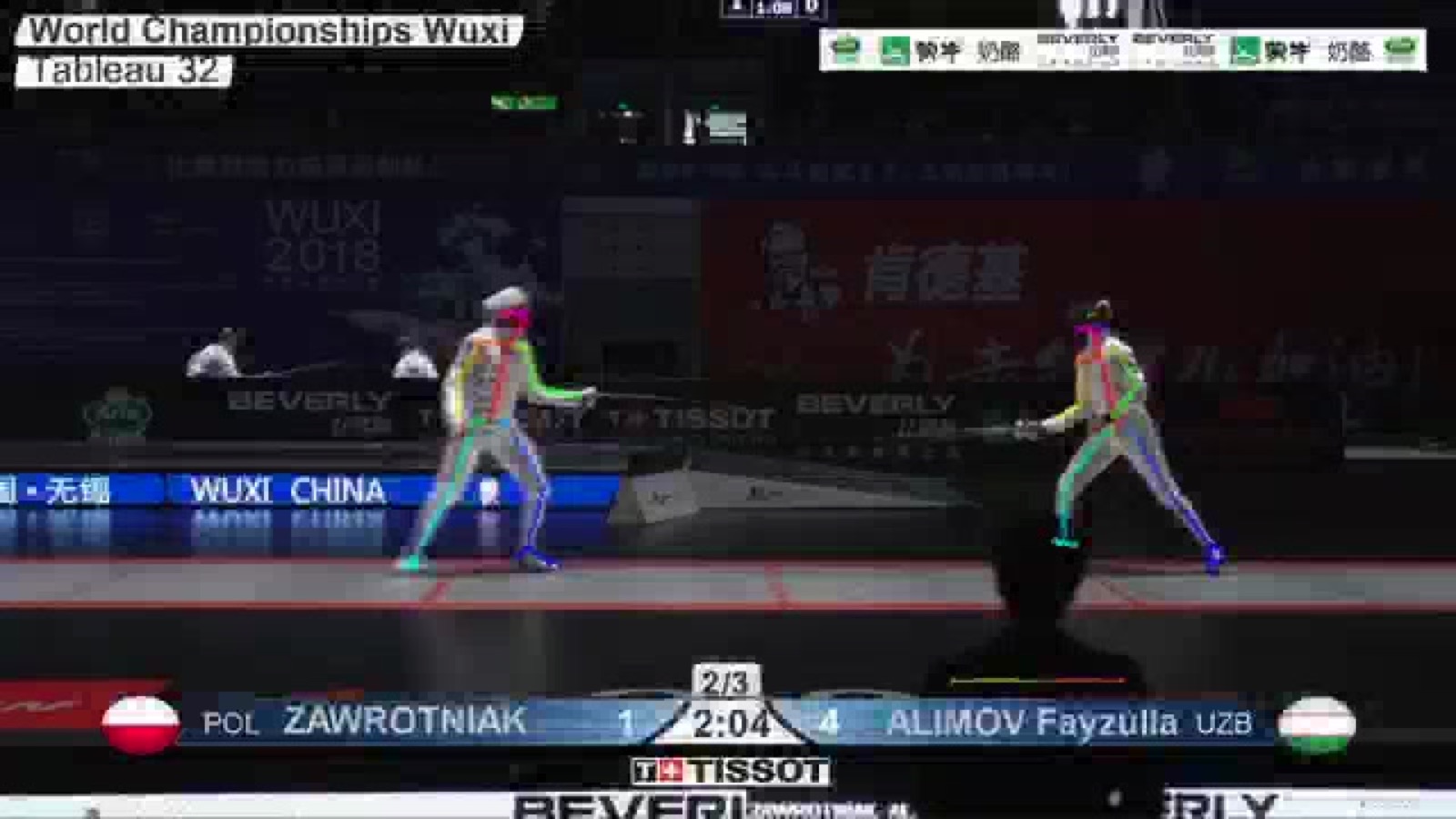
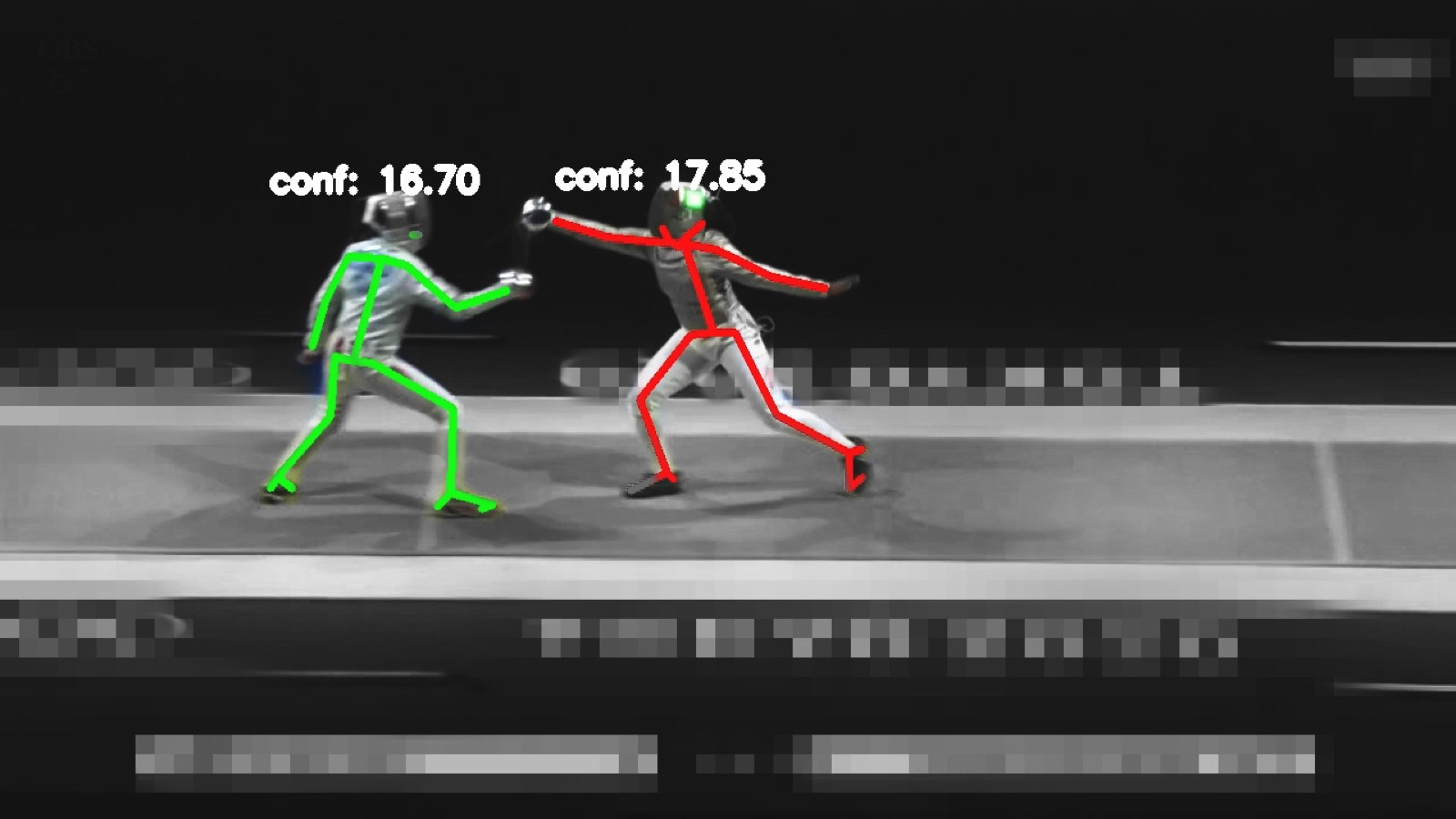
Skeletal data can be extracted from fencing video clips using pose estimation models such as OpenPose, to construct a large dataset of fencing poses. That dataset is then used to train the interactive model to generate a responding skeleton, given the user’s skeleton.
From skeletons to a chronophotograph
In the room
Combating the “sameness” in AI art
A key research contribution was identifying three structural reasons why AI-generated imagery converges toward uniformity — and demonstrating how interactivity and custom datasets can fight it. This was published as a companion paper on arXiv.
Exhibitions
- CHI 2023 — ACM Conference on Human Factors in Computing Systems
- NeurIPS 2023 — Conference on Neural Information Processing Systems
- Latent Ville — 2023 MAT End of Year Show, UCSB