Attention Manifold
Turning a prediction of where your eyes will go into a solid you can walk around
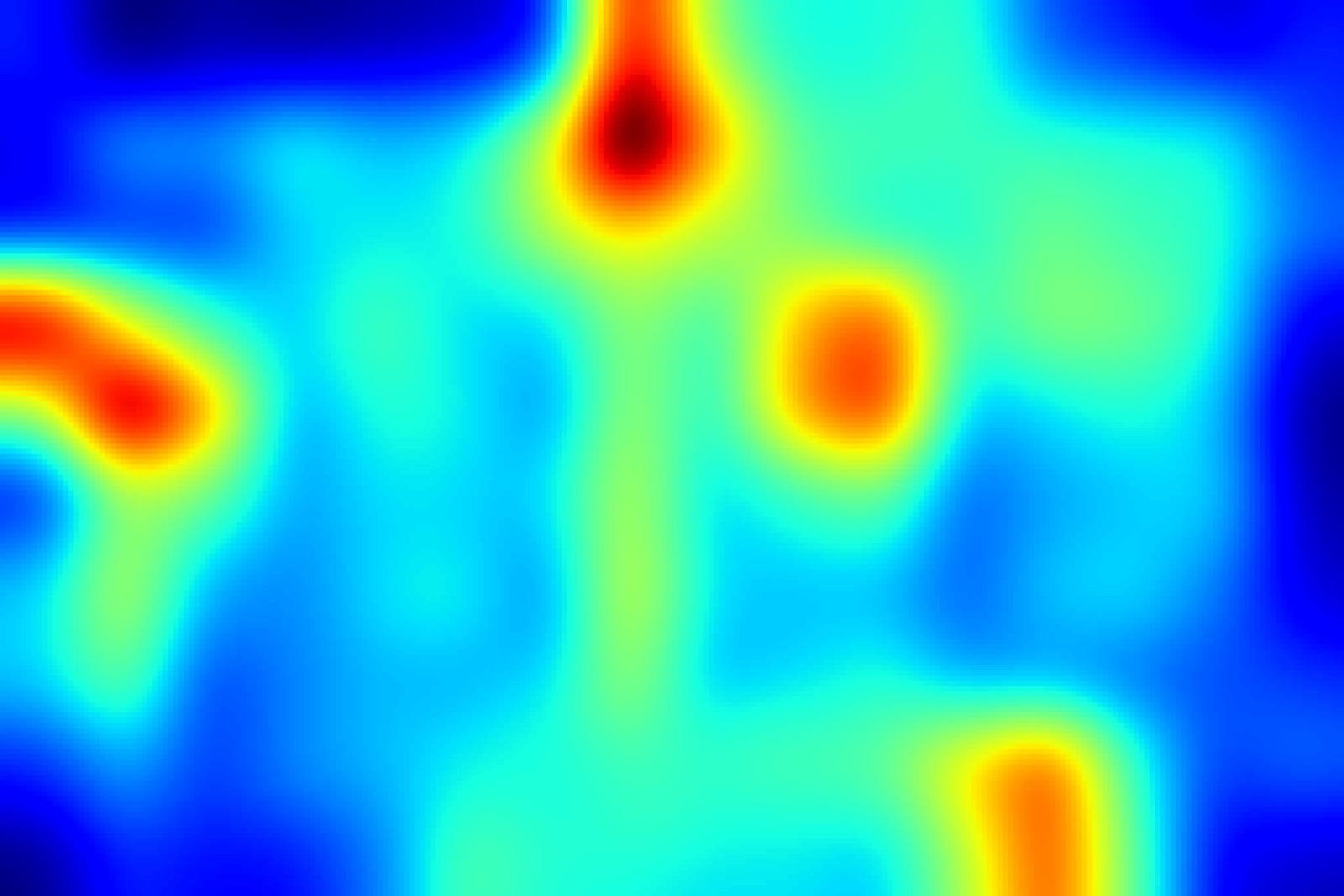
Saliency models predict where a person will look at a picture, and in what order. They are normally used as a flat heat map laid back over the image — a diagnostic, read and discarded. Attention Manifold takes that prediction and treats it as geometry instead: the map becomes a surface, displaced by how much attention each part of the image is expected to draw.
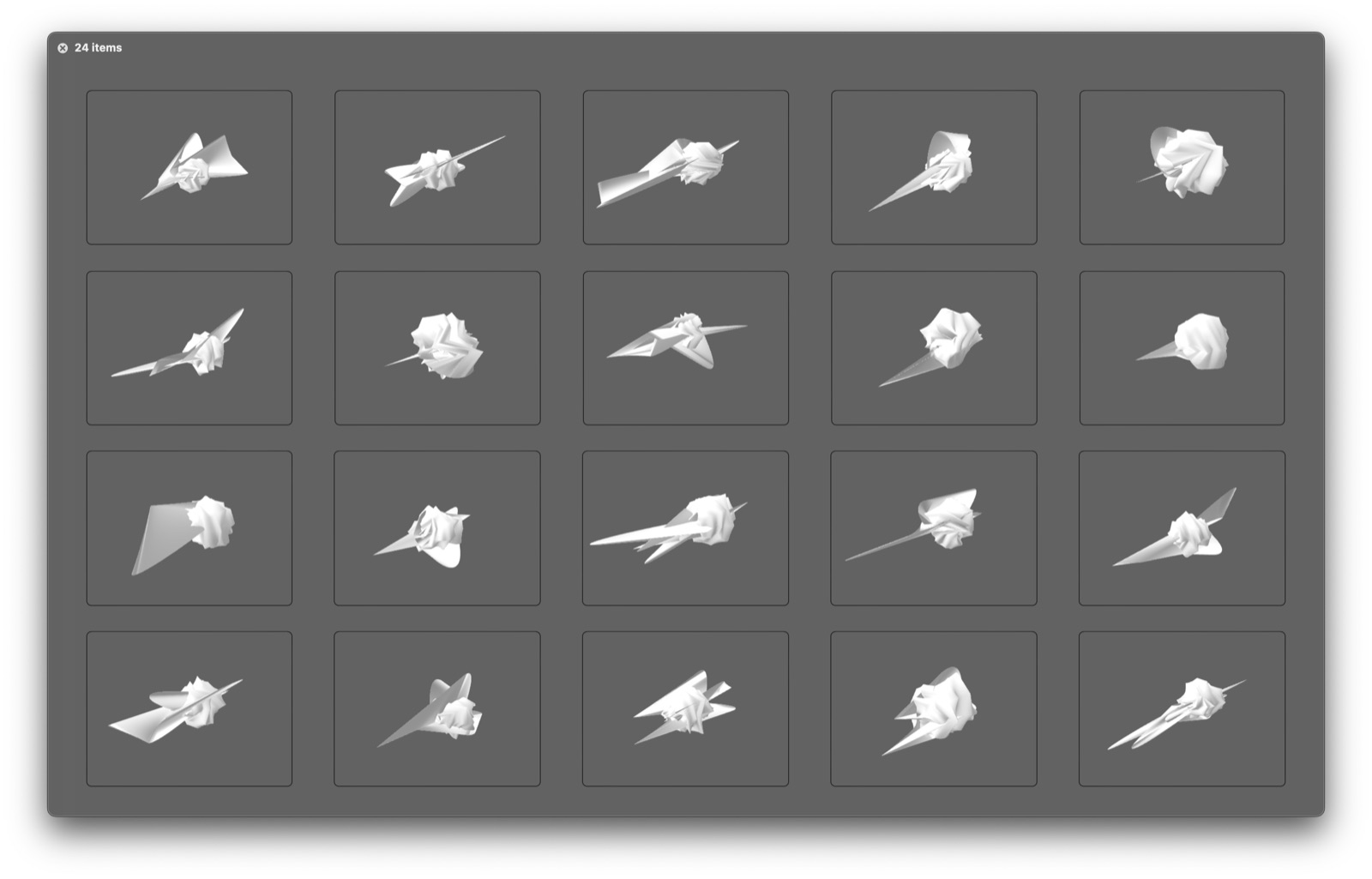
One image, one solid
Every image in the set produces its own form. A picture with a single dominant subject collapses into a spike; one that scatters attention across the frame folds into something knotted. Put a curated collection through the pipeline and you get a family of shapes that are, in a strict sense, portraits of how the pictures are looked at rather than of what is in them.
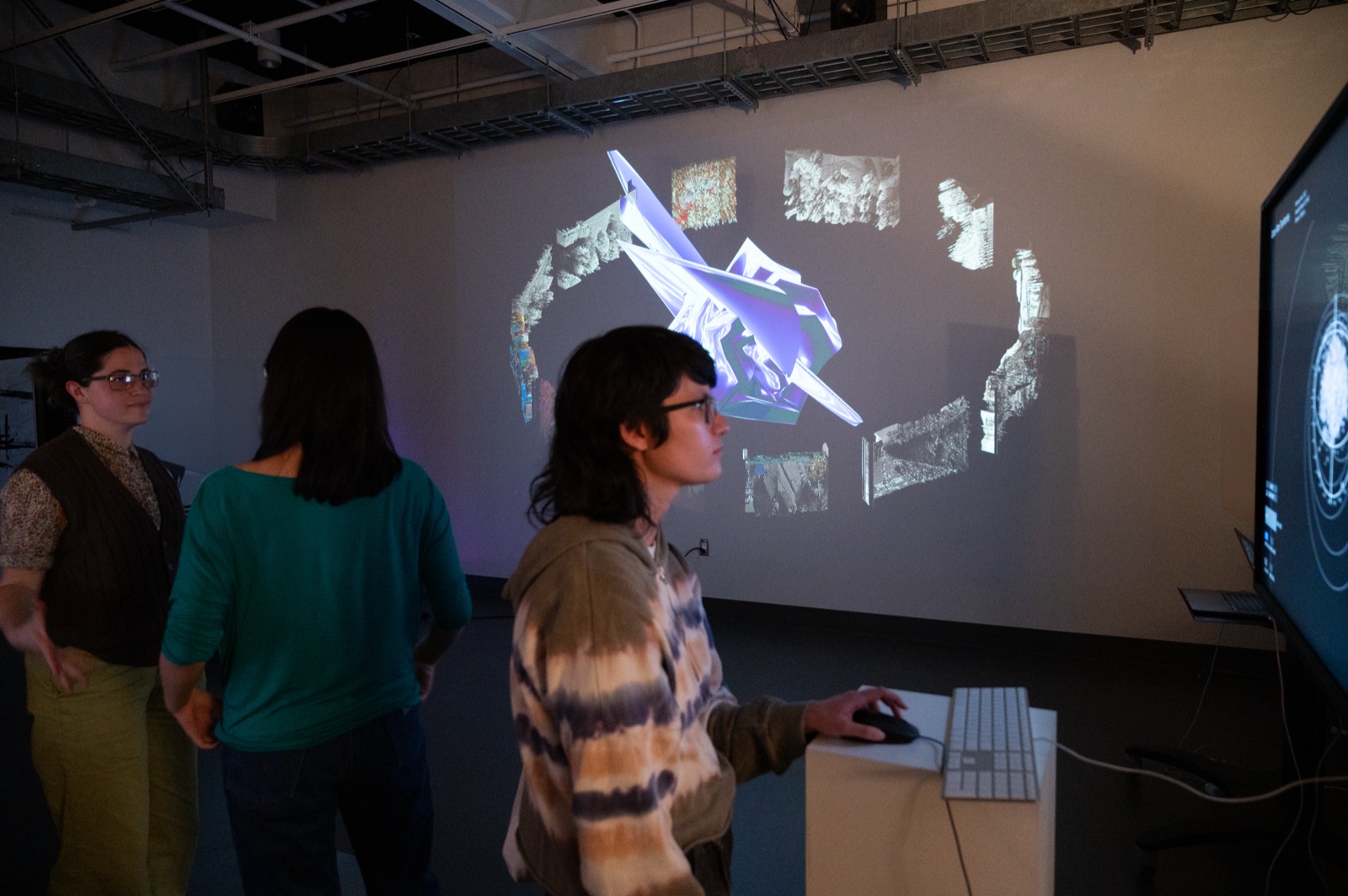
In the room
Shown as a projected environment: the manifold turns at the centre while the source images ring it, so the shape and the thing it came from stay in the same field of view. A visitor at the pedestal drives it.
Under it
The prediction comes from DeepGaze, fine-tuned on a curated image set, run as a small service that returns both fixation maps and scanpaths. TouchDesigner handles the live side; Blender does the offline renders of the manifolds themselves.