Renderers from Scratch
A REYES micropolygon pipeline and a BVH path tracer, both built by hand
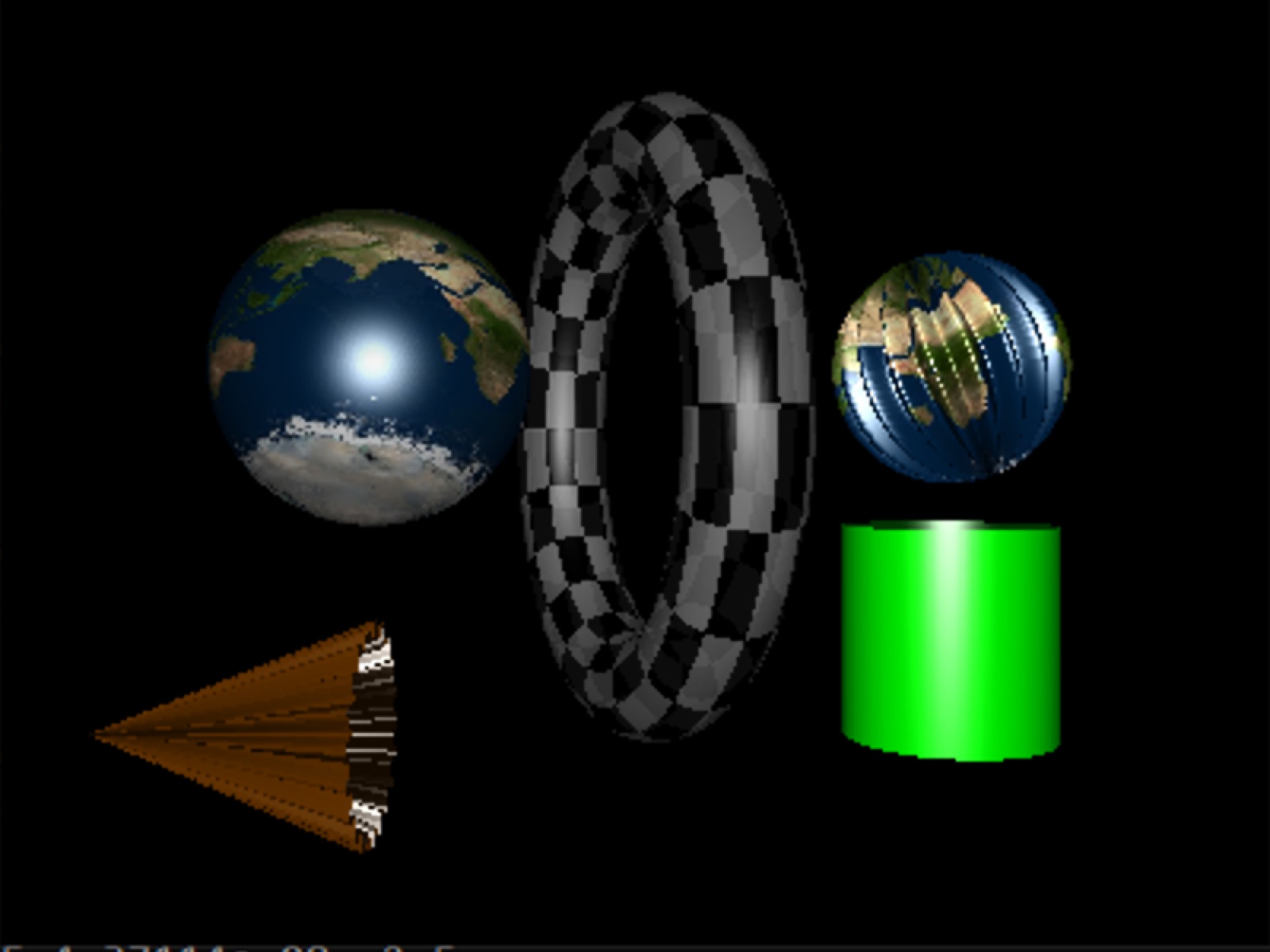
Two renderers written for a graduate computer graphics course, neither of them using a graphics library to do the actual rendering.
REYES
The first is a REYES pipeline — the micropolygon approach Pixar shipped Renderman on. Surfaces are diced into sub-pixel quads, shaded, then sampled. The test scene is the usual suspects: a textured sphere, a checkered torus, a reflective sphere, a cylinder, a cone.
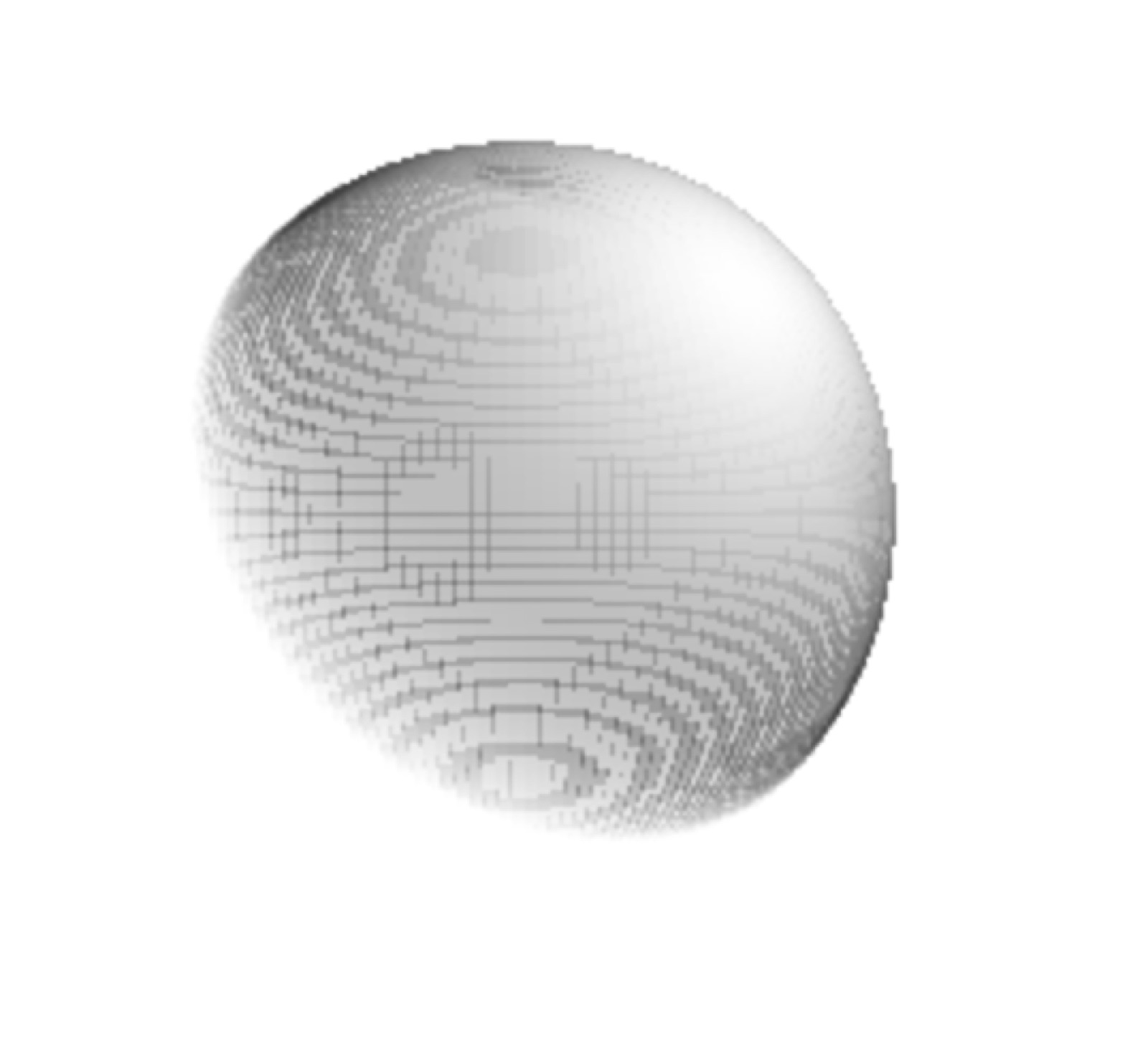
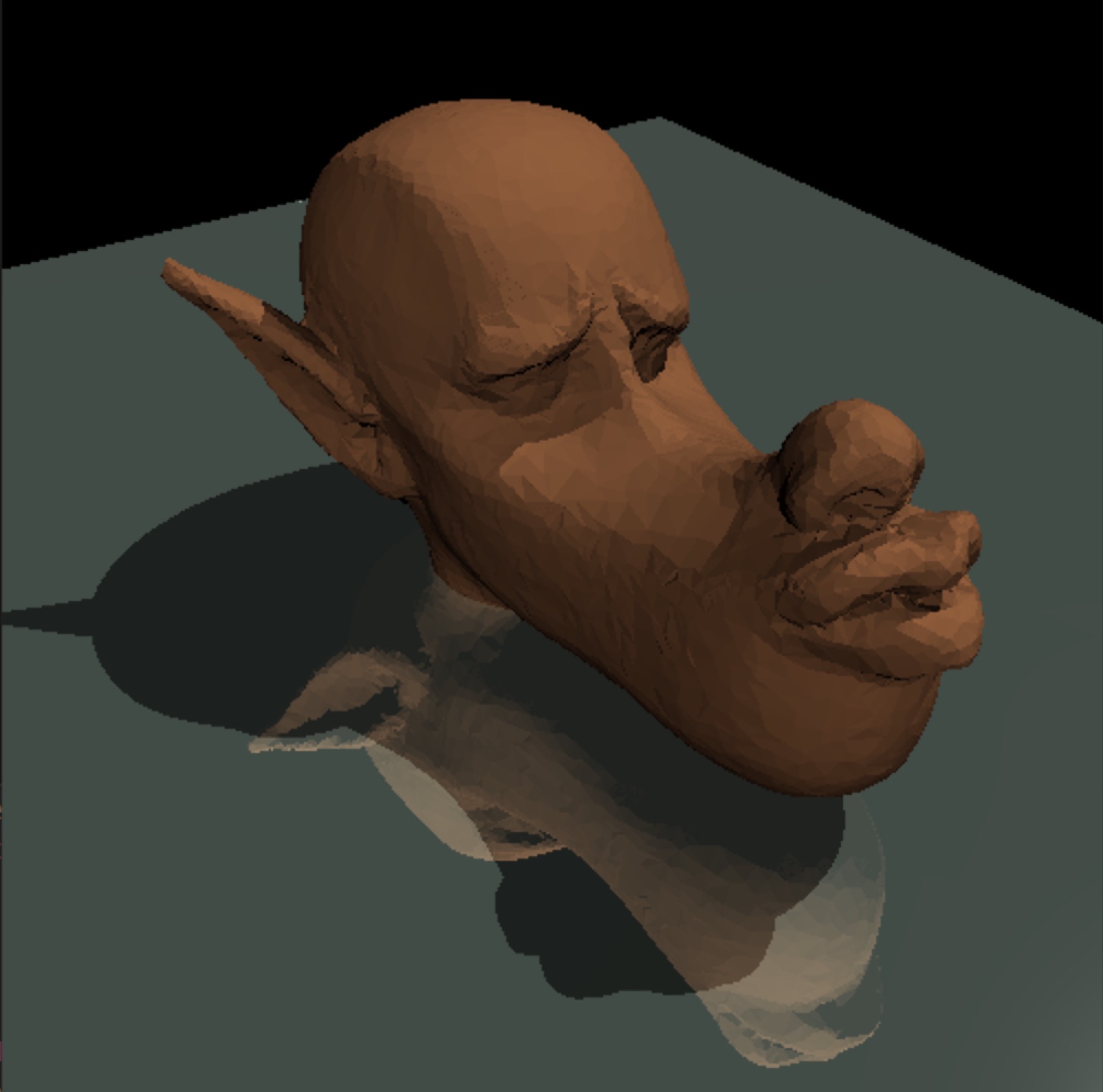
Path tracer with a BVH
The second is a path tracer. The interesting part was not the light transport but the acceleration structure: a bounding volume hierarchy, using the seven-dimension slab test from Kajiya’s paper.
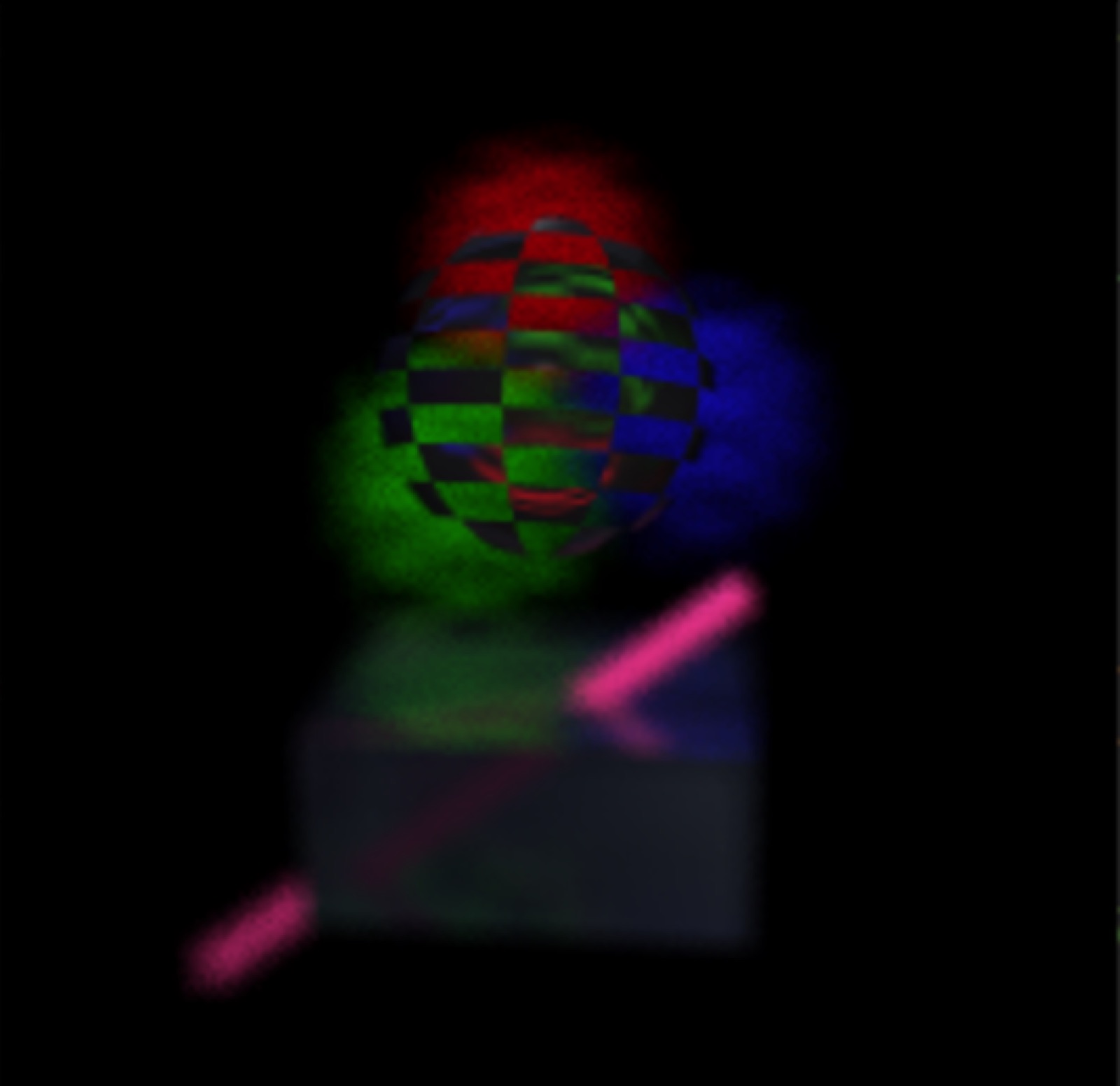
It worked, and it was slow — one scene took twenty minutes at 1500 × 1500 with a single sample per pixel. The tree built correctly; the problem was how it built. Triangles were inserted into a sub-cell based on whether that cell contained the triangle’s centre, then the cell was grown to fit whatever it had swallowed. For a large triangle that produces a badly shaped cell, and the hierarchy stops being much of a hierarchy.
Two days of trying to fix it did not fix it. Writing that down is the useful part of the exercise: the structure was right and the build heuristic was wrong, which is a distinction worth having learned early.