HSL Transformation
Turning a flat photograph into a 3D model by reading its own colour as geometry
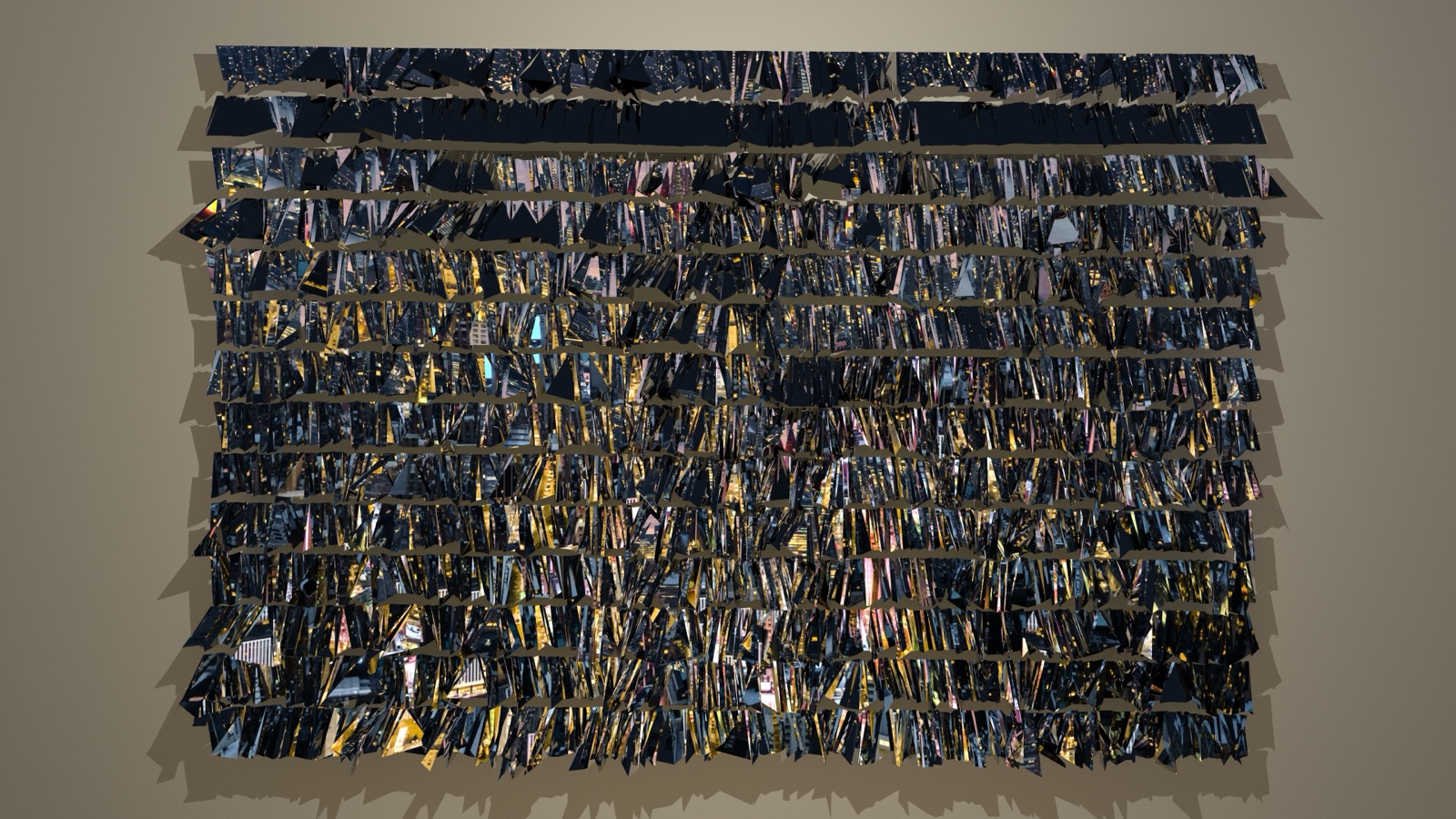
Photographs are considered to contain only 2D information. But a photograph is actually a capture of our 4D spatial-temporal world. In this irreversible, information-losing compression, how could we reconstruct the higher-dimensional world from a flat image?
The pipeline
The photograph is placed in a virtual 3D space and divided into a grid of rectangles. Each rectangle has four vertices; every vertex carries a 3D position and a colour value taken from its coordinates in the original image.
The colour is converted from RGB to HSB, and the vertex is displaced according to hue, saturation, and brightness — hue becomes an angle, saturation a radius, brightness a height.
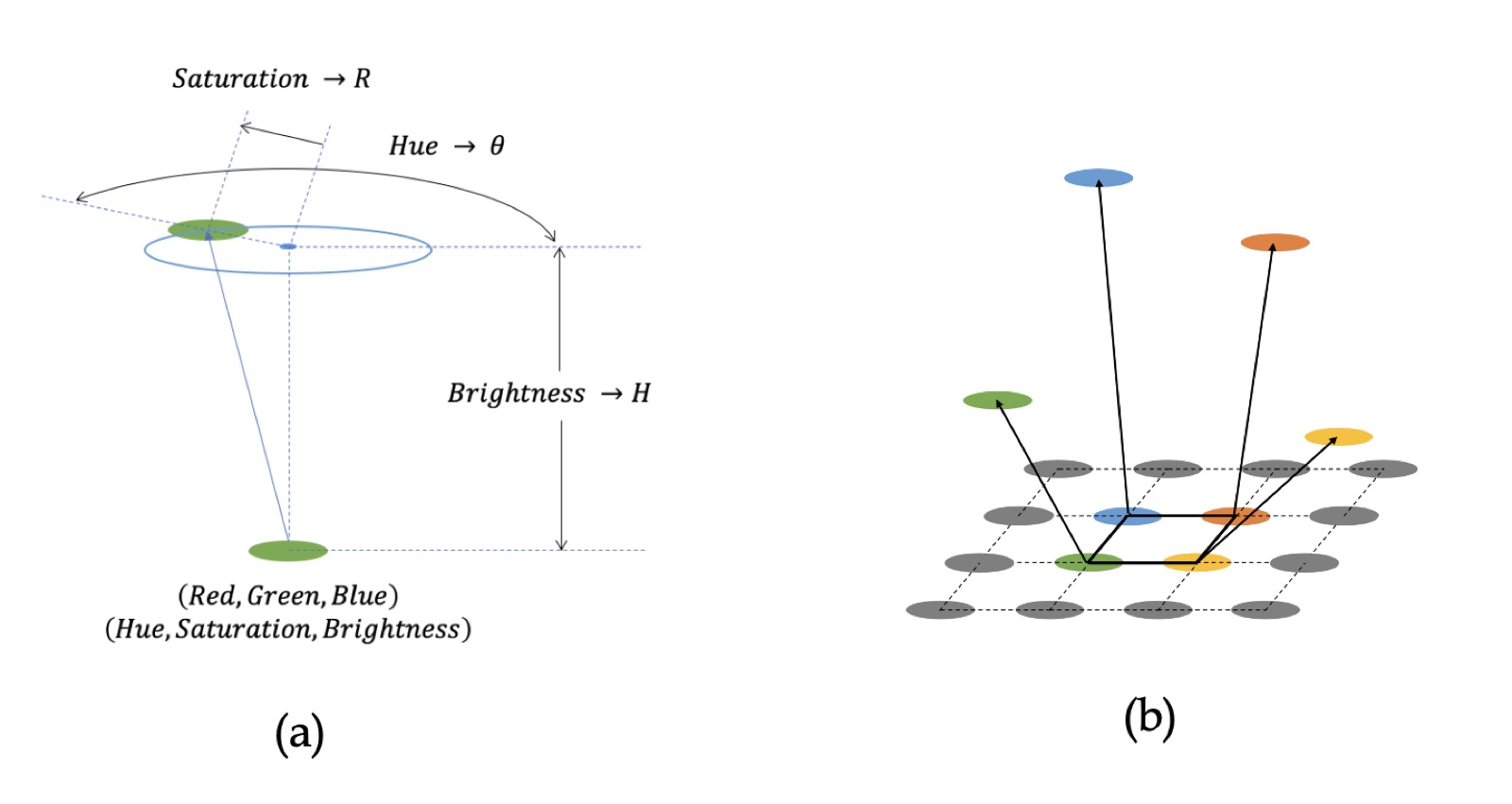
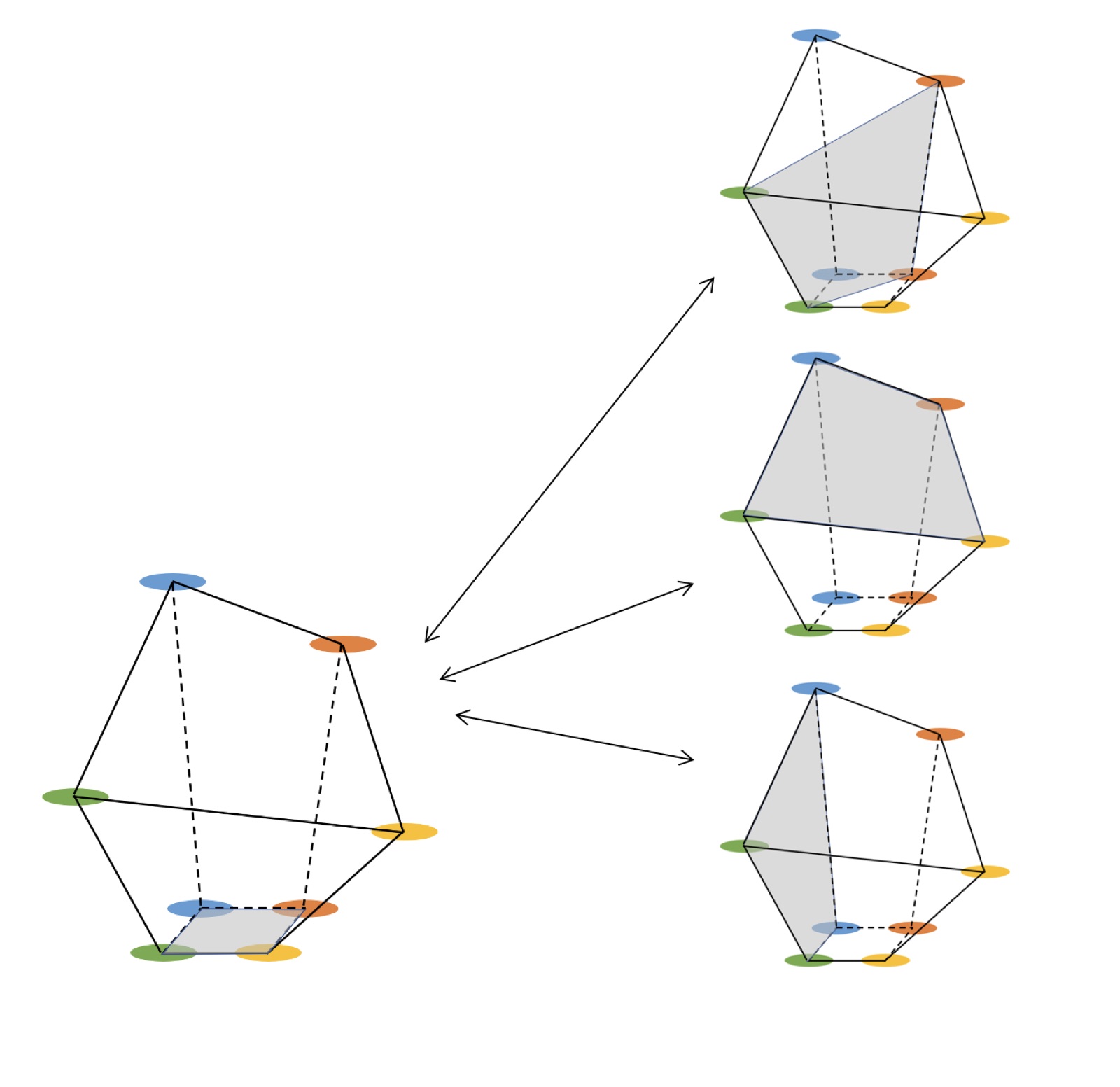
From the eight vertices — four original, four displaced — the algorithm selects any four to form a new polygon, and the flat rectangle is replaced by that polygon. Repeat across the grid and the 2D image has become a 3D surface.
Rendering
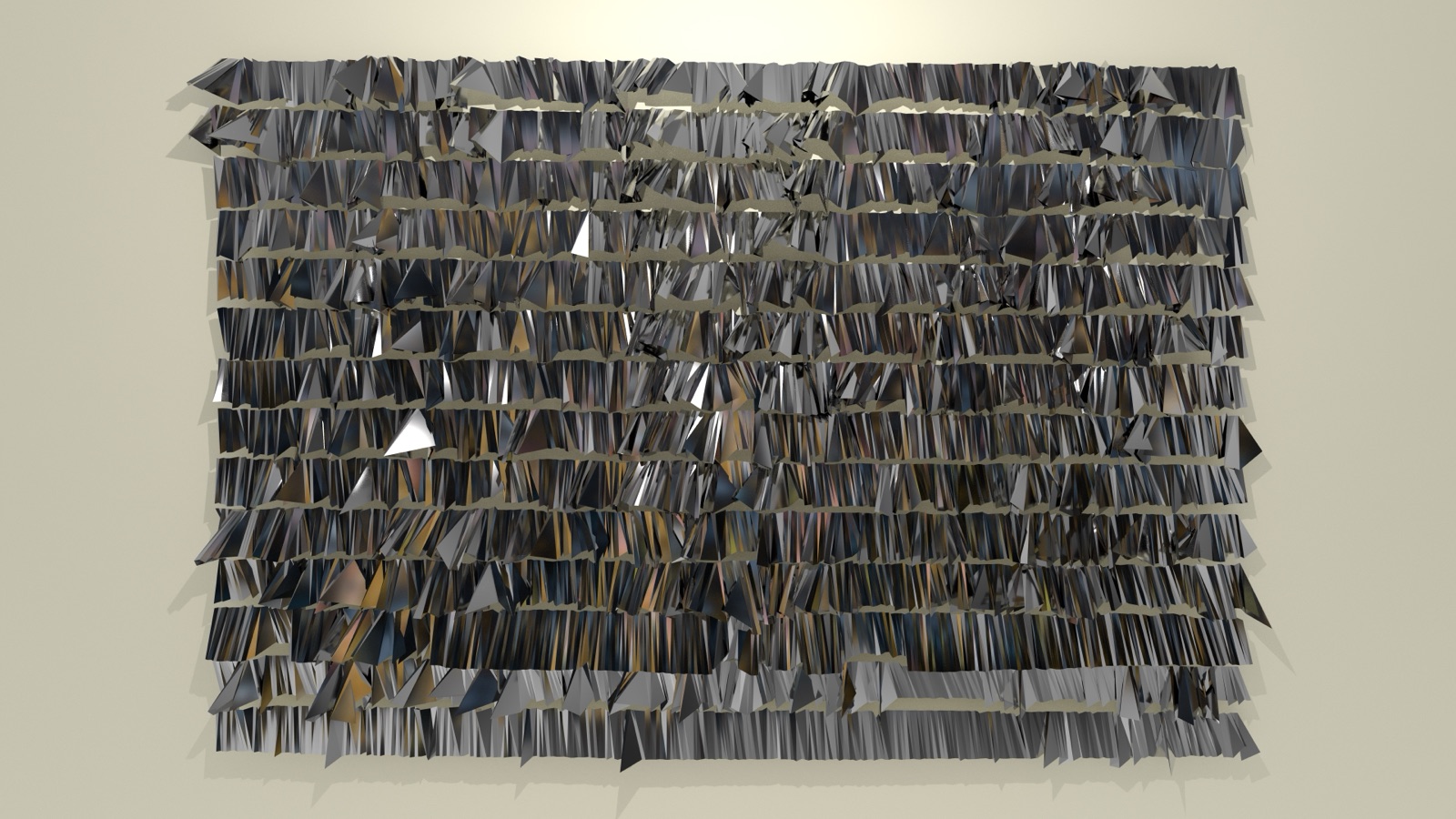
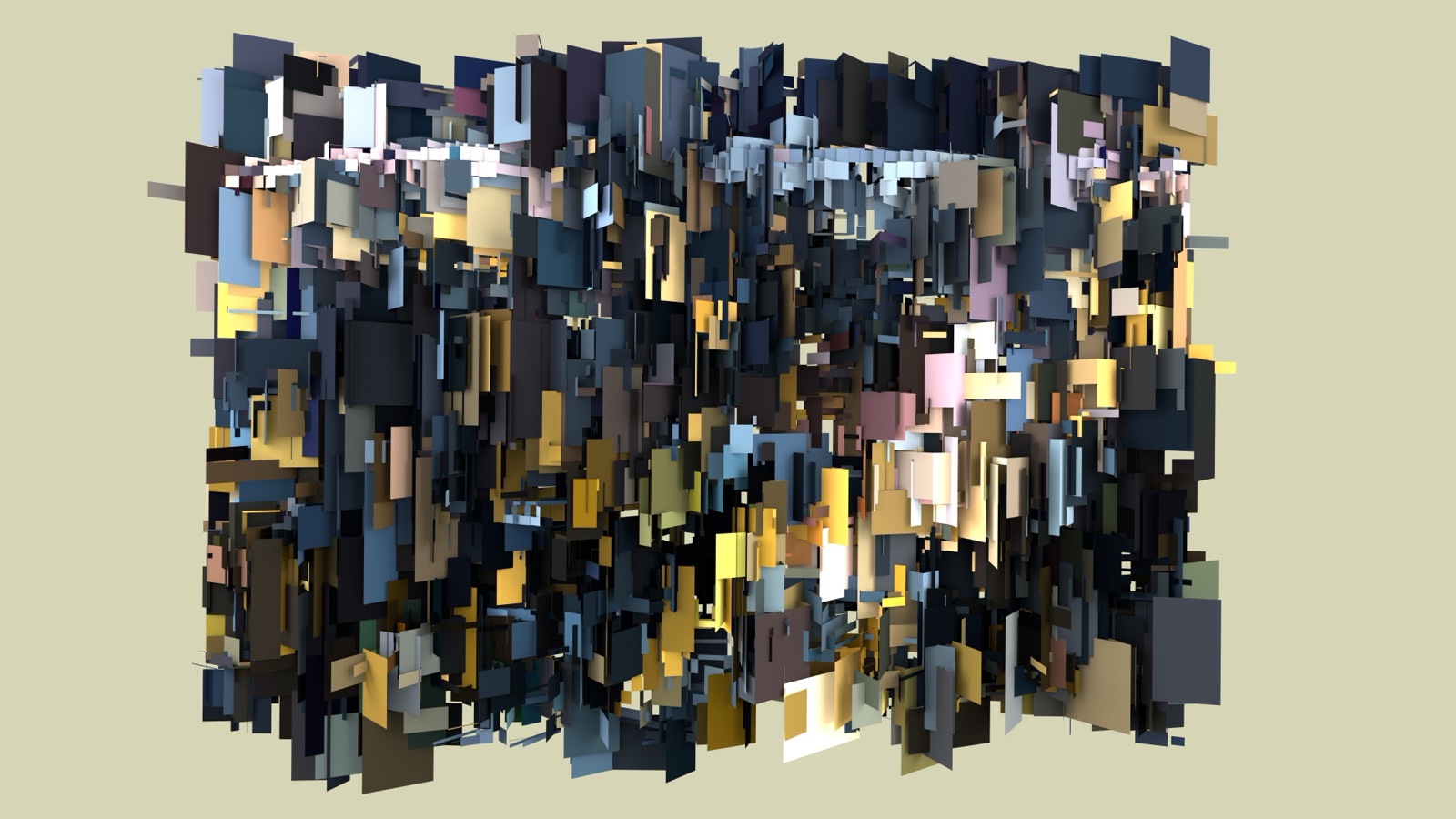
Once a 3D model exists it can go into Blender or Cinema 4D, where the scene around it — light, material, camera — is free to design. The renders below come out of the same source photograph, a night view of New York, treated with different surface materials. They can be produced at extreme resolution, up to 7680 × 4320.
Realtime version
To present the model in another interactive way, the source image becomes a live camera frame instead of a still: an iPad’s front camera feeds the pipeline and the model rebuilds itself as people move in front of it.
An off-axis projection improves the 3D read — the rendering perspective is adjusted to the viewer’s eye position, tracked by the depth sensor in the same front camera.